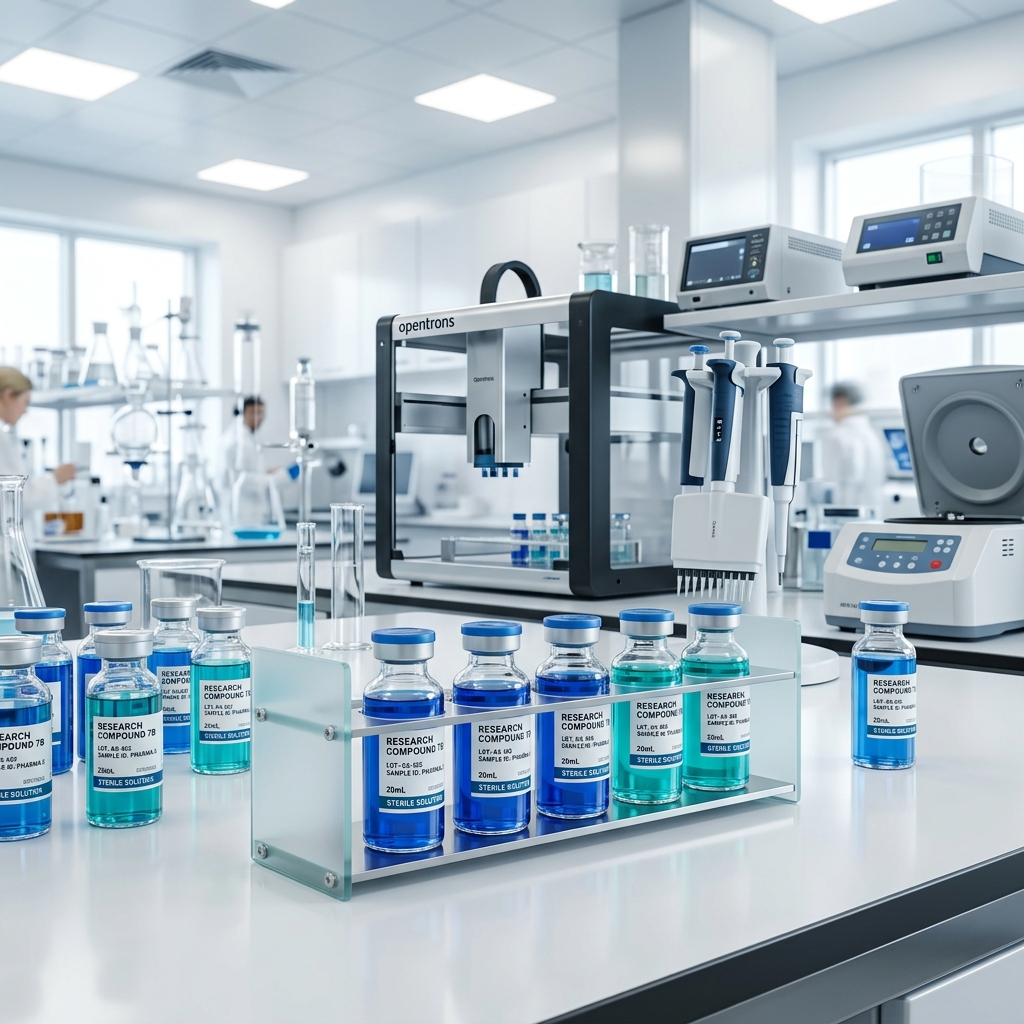
OptimaPeptideLab.com is your clinical-grade reference partner for targeted research therapies supporting metabolism, tissue recovery, cellular anti-aging, and cognitive longevity.
Critical guidance on peptide dilution ratios, molar concentrations, and precision reconstitution protocols.
Select from our reference peptide modules or explore AIM International daily essentials recommended for everyone.
PrepZymes, FloraFood, & Herbal Fiber Blend — recommended for overall gut health & vitality.
Retatrutide, Cagrilintide, 5-Amino-1MQ, MOTS-c research compounds.
BPC-157, TB-500, ARA-290, and KPV tissue regeneration factors.
GHK-Cu, NAD+, SS-31, and Glutathione cellular energy substrates.
A CAS Registry Number (Chemical Abstracts Service, a division of the American Chemical Society) is a unique, official numerical code assigned to one specific chemical or peptide substance.
CAS numbers contain up to 10 digits split into 3 parts by hyphens. The final single digit is a check digit to verify chemical authenticity.
All compounds are supplied with independent batch analytical testing certificates (COA) for laboratory research use only.
Easily calculate concentration (mcg/mL) and syringe unit marks (IU) for reconstituting lyophilized peptide vials with Bacteriostatic (BAC) Water.
Fill out your laboratory contact details and follow the strict payment memo instructions below.
Welcome to OptimaPeptideLab.com. Prior to entering, you must confirm your age and acknowledge laboratory research terms.
This phrase is a quality-assurance claim stating that every manufactured batch of the peptide has been lab-tested and verified to contain at least 99% of the intended molecule, using industry gold-standard testing methods.
A "lot" (or batch) is a specific production run. "All lots" means every single batch manufactured undergoes testing, not just an occasional sample.
At least 99% of the peptide material present is the exact, full-length target peptide. The remaining <1% consists of minor synthesis byproducts (like truncated peptide chains or deletion sequences).
A separation technique that pumps the liquid sample through a column under high pressure. It physically separates the target peptide from impurities and measures purity percentage based on UV absorption peaks.
A detection method paired with HPLC that measures the exact mass-to-charge ratio (m/z) of the molecules. It confirms the chemical identity and exact molecular weight to ensure the peptide synthesized is actually the intended compound, not a lookalike.
Peptide synthesis is built step-by-step, amino acid by amino acid. Errors during synthesis can create incomplete chains or modified sequences. Pairing HPLC with Mass Spectrometry ensures two critical things: HPLC confirms how pure it is, and MS confirms what it is.
A CAS Registry Number (CASRN) is a unique, official numerical identifier assigned by the Chemical Abstracts Service (a division of the American Chemical Society) to every specific chemical substance.